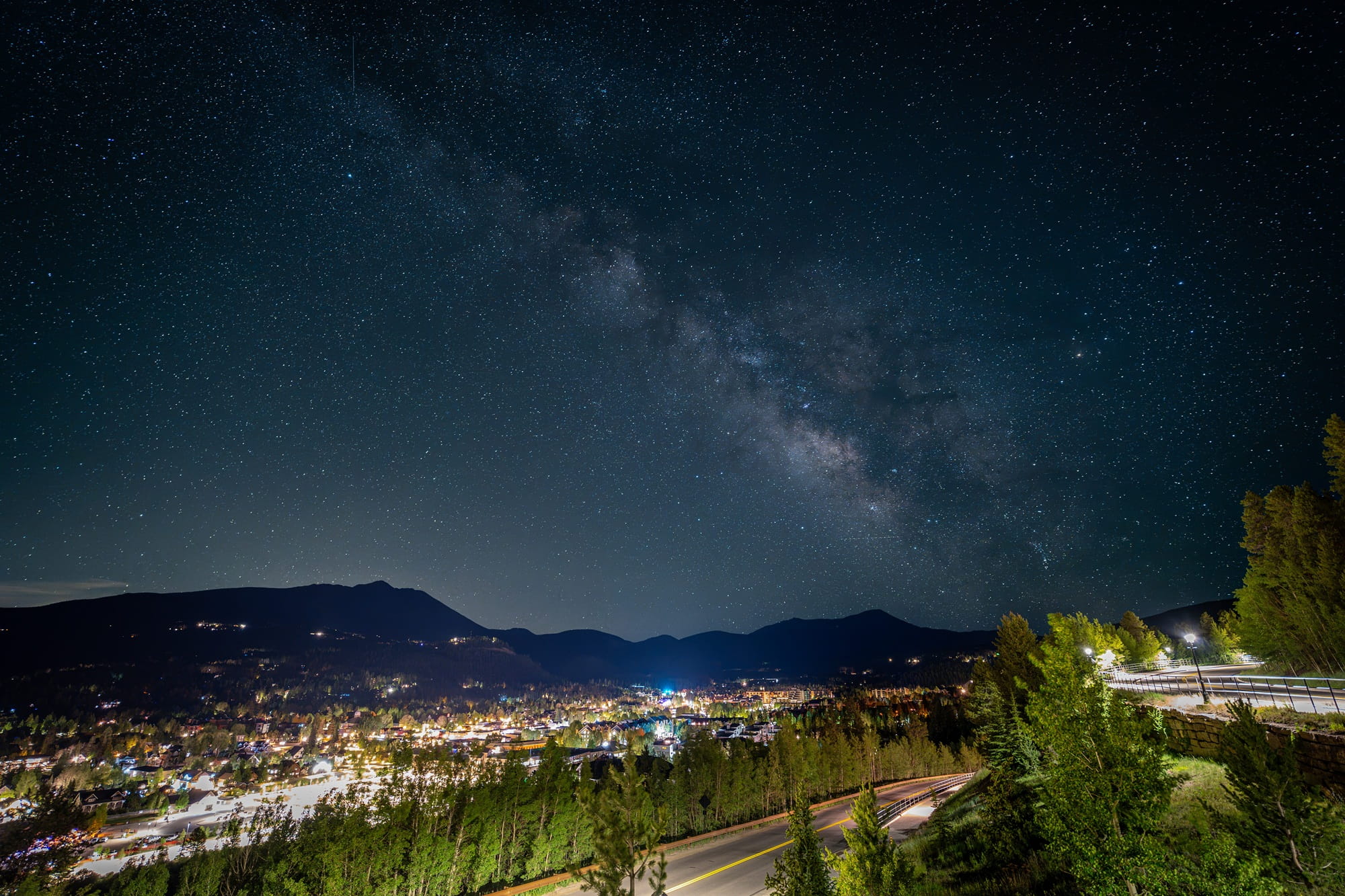
Summer Stargazing in Breckenridge
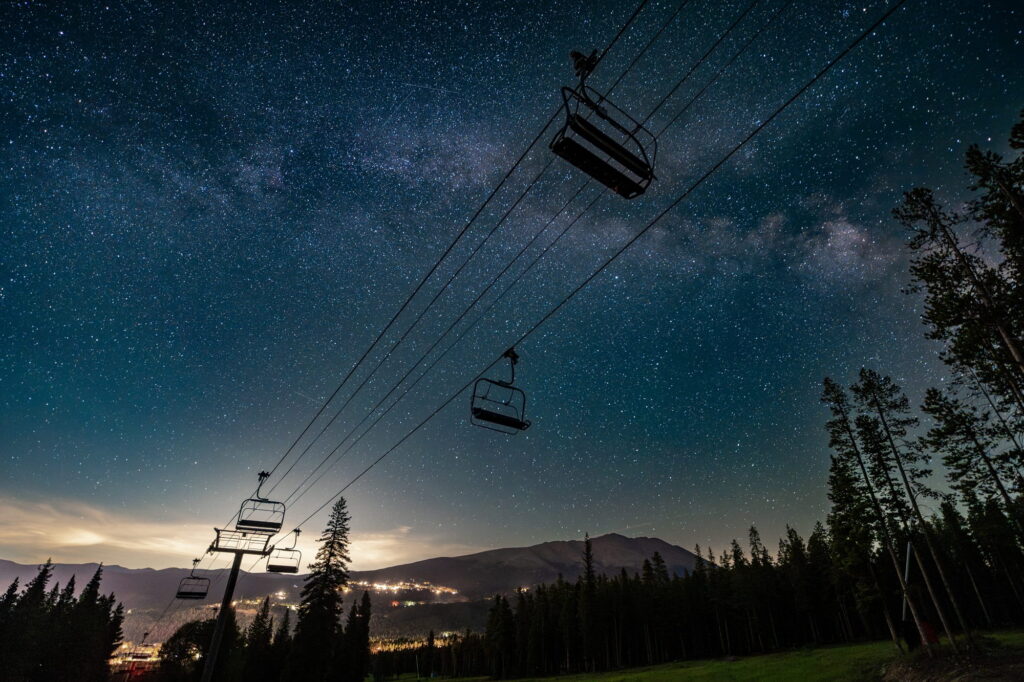
We hold these truths, that there are four seasons, and that Breckenridge excels in each one. But did you know that Breckenridge has two other seasons? The season of winter stargazing, and the season of summer stargazing. Each stargazing calls you with a different song, yet both with the same message: It is time for you to get outside after dark and look up.
Allow your eyes the pleasure of Breckenridge’s spell-binding, bejeweled night sky. A sky so dark, so textured, so alive, so vast. A night sky filled with patterns, patches, outlines, and twinkling pinpricks of lights you will stop, and say “Wow!” And you either say this aloud, or inside as if a silent prayer. It’s a feeling that makes you suddenly and simultaneously alive, unexpectedly very small, and very lucky to be in Breckenridge, all at once. This, my friend, is awe worthy.
It’s not by accident. Breckenridge is the first mountain ski resort community in Colorado to earn the esteemed certification as a Certified Dark Sky Community from DarkSky International. It didn’t happen overnight either; the town earned it. It was an effort that was close to two decades in the making.
And the payoff? Downward directed, low lumen, and warmer color temperature outdoor lighting, with motion detectors and dimmers, diminish the impact of artificial light at night on wildlife, insects, birds, and you too.
From nocturnal wildlife active at night being disrupted at both ends, night and day; to insects engaging in harmful flight behavior (think of moths circling a pole light at night) which prevents them from finding flowers or mates, eventually fatiguing to fall prey or die on the ground. Migrating birds becoming disoriented and confused by artificial light at night during their migratory journey with dangerous consequences for the birds.
Did you know that Breckenridge resides inside the Central Flyway of the North American bird migration route? By reducing upwards directed artificial light at night the town, businesses and the community help them stay on course, helping them get where they need to be and when they need to be there. Here’s a fact with impact: Over 40 million waterfowl and over 350 bird species travel the Central North American Flyway.
As for you and me, studies have found associations between higher levels of nighttime light and the suppression of melatonin, shifted sleep–wake cycles, and even altered gene activity. Makes you happy to be in Breckenridge, I bet.
Summer Stargazing
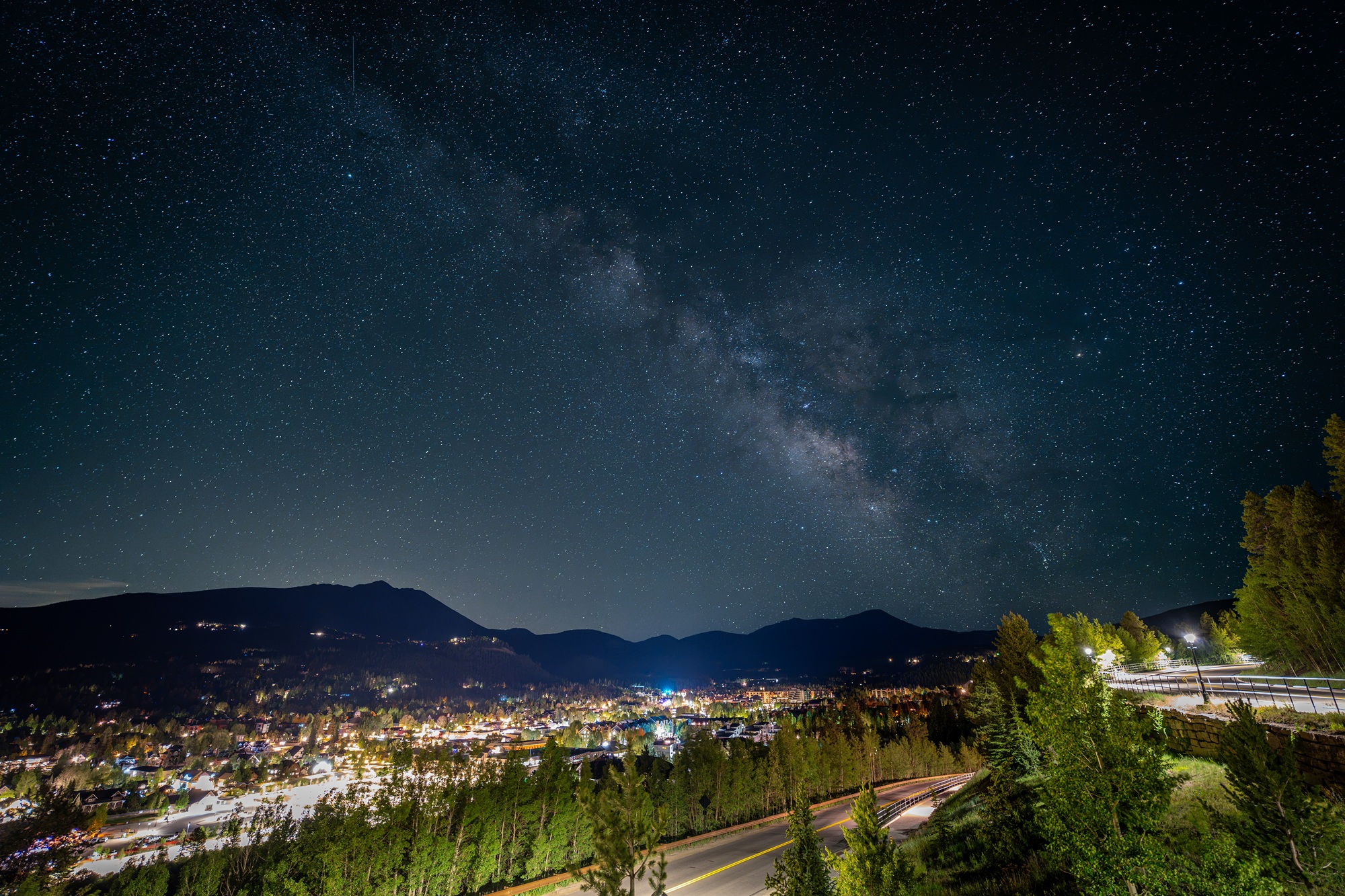
My hunch is you’ve already figured it out that with Breckenridge protecting its night sky with such seriousness, their summer stargazing is going to be what you expect it to be. Dark, inky black, magical.
But where to go in Breckenridge to have this nocturnal visual experience on the original big screen? Here are my top stargazing spots in and around Breckenridge. We’ll start close to town and then spread out. From easy peasy and nonchalant, to a bit more effort and a little travel. No matter where you stargaze, here’s a link to an all sky chart displaying the summer night sky over Breckenridge. Summer Stargazing
No matter which of these stargazing locations you choose, visit during the weekdays when it’s not as busy. Carpool with family and friends. Stargazing is fun to experience with others, and few cars have less impact on residents and wildlife, while also leaving a park space for others to use. Plan how you’ll pack out what you bring stargazing. Bring a trash bag or two, as you can use one to carry blankets in and out. Lastly, turn your red headlamp to the ground and take two good walk-arounds to make sure when you leave there’s no trace of your celestial starstruck adventure on terra firma.
In Town Stargazing
Breckenridge Overlook: The overlook is a short walk, run, bike, or drive up Ski Hill Road. Look for the arched bridge with the Shock Hill sign in the middle of the arch. Be alert as the pullout is immediately on your left after a sharp hairpin turn. From the Overlook you have a sweeping view from the northwest, to the east, and then to the south above the town’s subdued light dome. The overlook is a perfect spot for a quick peek of the evening’s brightest stars and planets. Looking for a romantic spot to watch the Full Moon to rise over Breckenridge with your sweetie? This is the place.
Carter Park: Tucked above Main Street on the east side of town, Carter Park sits high enough to give you a clear broad view from the south, to the west, and then to the northwest framed by Breckenridge’s famous peaks and Tenmile Range. Here the night sky feels like a quiet compromise between town life and true mountain darkness. This balance gives it a very particular character. I suggest you walk up from the pavilion towards the sledding hill. There you stand in a wide, open field on a gentle slope. You’ll be in a bit of a bowl, which enhances the sky, pulling your attention upward. Now, that’s nice.
A Little Outside of Town
Dickey Day Use Area: My personal favorite. This location offers a wide jaw-dropping view and mountain silhouettes in the west, and an unobstructed view of the horizon from the west, to the north, and to the east since you’re at the southern edge of Lake Dillon. Due to the orientation of the area, the lights from St. Anthony Summit Hospital, and the town of Frisco are blocked. While Carter Park is a step up from the Overlook, this area is a noticeable leap forward as it is slightly removed from residential areas and faces open water. Fewer obstructions from buildings and thus less direct light interference. The Dickey Day Use Area will change the feel of the night sky. You’ll notice it. This stargazing location is a hidden gem precisely because most visitors don’t go there. Let’s just keep this a secret between us.
Boreas Pass: Now, here is where and when your experience of Breckenridge’s celestial canopy shifts from “nice stargazing” to something that actually feels cosmic. If Carter Park is approachable and Dickey is quietly expansive, Boreas is the real deal. As you head east out of town towards this historic pass the night sky opens up fast. In spring the lower sections of the road are usually accessible. Here you’ll see that the Milky Way isn’t just visible; you’ll see structure, dark dust lanes, bright stars, and dark patches. The number of visible stars jumps into the thousands and constellations almost get lost in the density of stars from Boreas Pass.
A Little Further Outside of Town (And worth the drive)
Hoosier Pass: If the Breckenridge Overlook is easy; the Dickey Day Use Area is a hidden gem; and Boreas Pass is excellent; then, Hoosier is the crown jewel. Sitting right on the Continental Divide, there’s a 360° horizon and almost nothing between you and the cosmos. Frequently, Hoosier Pass offers a clearer, cleaner, darker, and more intimate communion with the cosmos. At the pass, you’ll be about as close as you can get to true high-country stargazing without going deep off-road.
Of all these locations, Hoosier Pass is the place where the universe will welcome you home. Drive ten miles south on Highway 9 and pull into the large west-side lot. There are no trees to obstruct your 360 degree view of a sky that is so dense it feels crowded. You’ll see more of the sky dome, compared to the other locations. The thinner air at the pass grants you sharper stars, and less haze. If your goal is to truly see a 3D night sky with depth, structure, scale, and colors, then Hoosier Pass is your spot. Dress warm and bring a thermos of something warm to drink. Most of all, give yourself the pleasure of walking a bit away from the parking lot, and look up. You will feel the vastness of the cosmos. Welcome home.
First Time Stargazing? Astro Mark’s Pro Tips to Finding Awe.
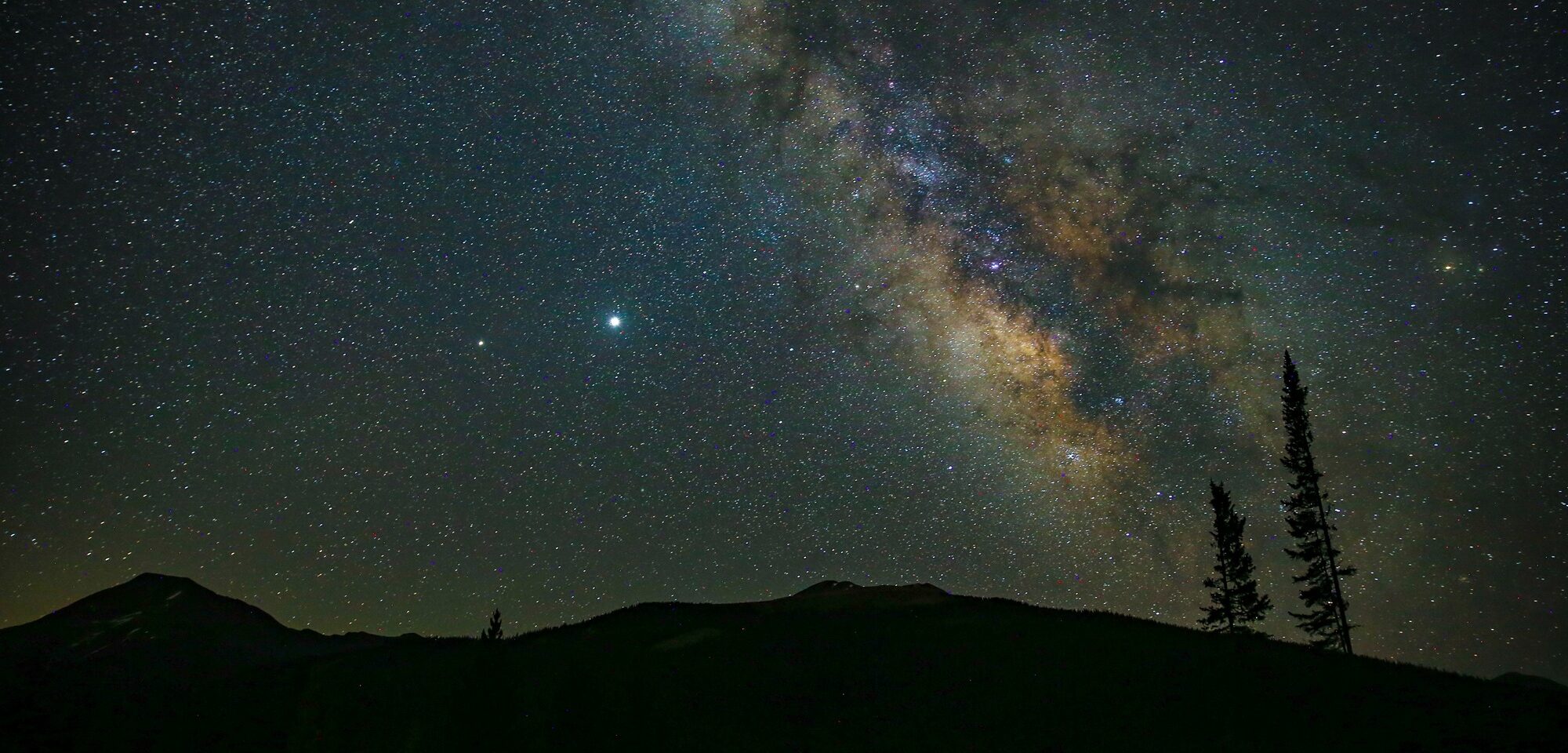
Here’s the baseline: you want a view of the horizon (as much as it is possible in the mountains); a dark location above streetlights if possible; free of interfering horizontal light trespass; and a spot where you can maintain your night vision once you achieve it. Here’s some other trick of the stargazing trade for you.
Give your eyes time to get night vision. Your eyes need 20 to 30 minutes to fully adapt to the darkness. That means no phone screens, no flashlights, and no headlamps, unless they emit red light. Red light preserves your night vision. Not to worry, if you do get blinded by the light, you can easily regain your night vision. A simple red-mode flashlight or headlamp is the single most useful piece of gear you can bring. You’ll need that red lamp to move safely in the darkness, and when it’s time to sweep the ground to leave no trace at the end of the night.
Dress for cold temperatures. At elevation, temperatures drop fast after sunset. Summer is no exception with nighttime temperatures in Breckenridge regularly in the high forties. If you’re comfortable when you step outside, you’re underdressed. This means dressing in layers (mandatory) and assembling as many as you can of the usual suspects: hat, gloves, long pants, warm sock, good shoes, long sleeve flannel shirt, fleece jacket.) Being cold while stargazing is a buzz kill. Don’t let it happen to you.
Have a chair. Craning your neck up to look at the night sky for twenty minutes is exhausting. A camp chair for you to recline in positions the whole celestial dome in front of you without straining your body.
Let go of expectations. Release the idea or expectation that you need to identify anything or everything. The goal isn’t a quiz about the night sky. My goal for you is to feel the cosmos, and achieve the intimate sensation that you are truly a part of the universe. As you look up, remember the wisdom of Carl Sagan, “We’re all made of star stuff.”
Watch for movement. Satellites cross the sky steadily, no blinking. Meteors are fast and gone in under a second. Planes blink. Once you learn the difference, the sky becomes surprisingly busy.
Notice color. The color of a star tells astronomers much about its age, direction it is moving, and chemical composition. Bluish-white colored stars are young and hot. Orangey-reddish colored stars are older. Planets don’t twinkle. Mars is orange-red colored; Saturn is a soft yellow; Jupiter is creamy white, almost ivory. The Milky Way can appear grayish to a bluish color to the naked eye.
See the Milky Way as texture, not an object. Look beyond the brightest part of the river of life overhead. Let your gaze soften and experience the entire band of stars packed so tightly you can’t see beyond them. Look for the dark rifts, the subtle color gradient, and how it dissolves. What you see is the Orion Spur which bridges the Sagittarius and Perseus Arms of our barred home galaxy.
Find the Big Dipper. Point your left shoulder where the Sun recently set, and turn your right shoulder 180 degrees from your left towards the east. You are now facing north. Look for the seven brightest, most obvious stars in the north that look like a ladle. That’s the Big Dipper, which we call an asterism residing in the constellation Ursa Major. Notice the difference in the colors of the Big Dipper’s seven stars?
Be alone for a moment. Stepping away from other people to look at the night sky isn’t just about getting darker conditions. You must have a private moment with the universe. Move away, silence the noise (internal and external) so your brain can fully register something vast. Silence amplifies perception. Many people never feel awe stargazing because they treat the sky like scenery. Make the sky the main event. Give your mind and soul space to register scale, distance, depth, mystery, and wonder. I promise you’ll feel a shift from “that’s pretty” to “this is overwhelming.” It is at that moment that stargazing stops being something you did, and starts being something you need.
B Like Breckenridge. If you’re new to Breckenridge, you may not know how important it is for all who call Breckenridge home to be thoughtful in how we interact with nature, wildlife, and one another. We do our part and leave no trace. I encourage you to “B Like Breckenridge” too! It’s a welcoming community.
Now, get outside and look up. The cosmos awaits!